
Slow rituals, tactile culture, and why Greece still teaches the world how to be present
Greek Guide to Analogue Living
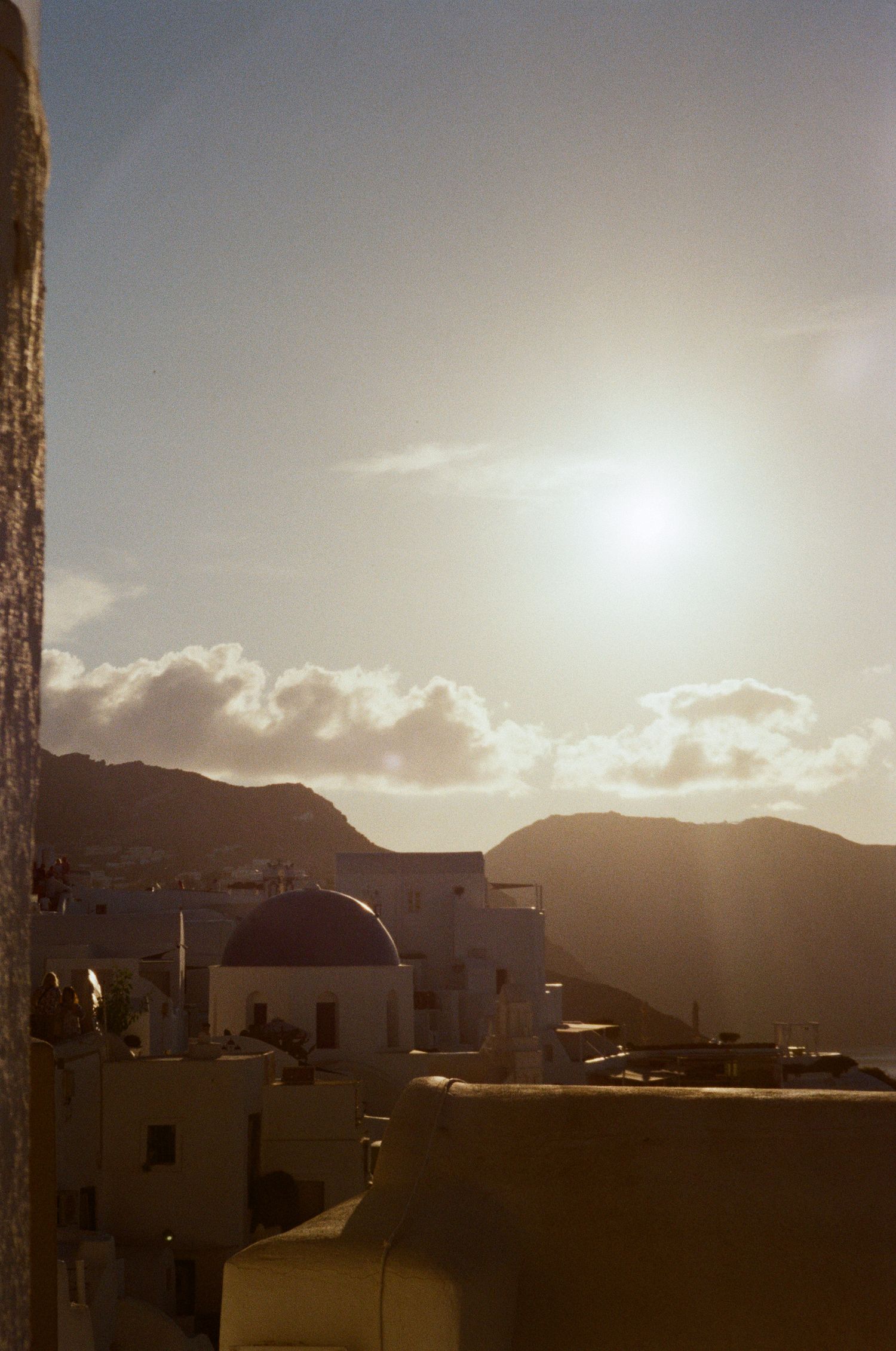
The performative era has started to wear itself out. The appetite for analogue life has returned. People are tired of living through a feed, and more interested in experiences that are real before they are documented.
Digital life delivered convenience, but it also delivered fatigue. Everything can be photographed, posted, optimised, commented on, and quietly judged. Even leisure can start to feel like maintenance.
So the pendulum is moving back the other way. Offline has quietly become the new status symbol, and defining your life through time, effort, and authorship carries a different kind of cultural weight.
People are printing photographs again. Writing things down. Cooking with their senses instead of tutorials. In short, people are looking for ways to live a little more analogue.
Now, I’m not about to claim the Greeks invented analogue living. But the word nostalgia does come from Greek: nostos (νόστος / NOS-tos) — return home, and algos (άλγος / AL-gos) — longing or ache. The original meaning was not sentimental. It described the pull to return to something familiar and real.
And that idea makes Greece a surprisingly good guide.
Consider this a short guide to living a more analogue life. Greece happens to be a very good place to start. For anyone drawn to analogue photography, film photography, or a more intentional way of documenting travel in Greece, this is also where that visual language naturally lives.
The Taverna
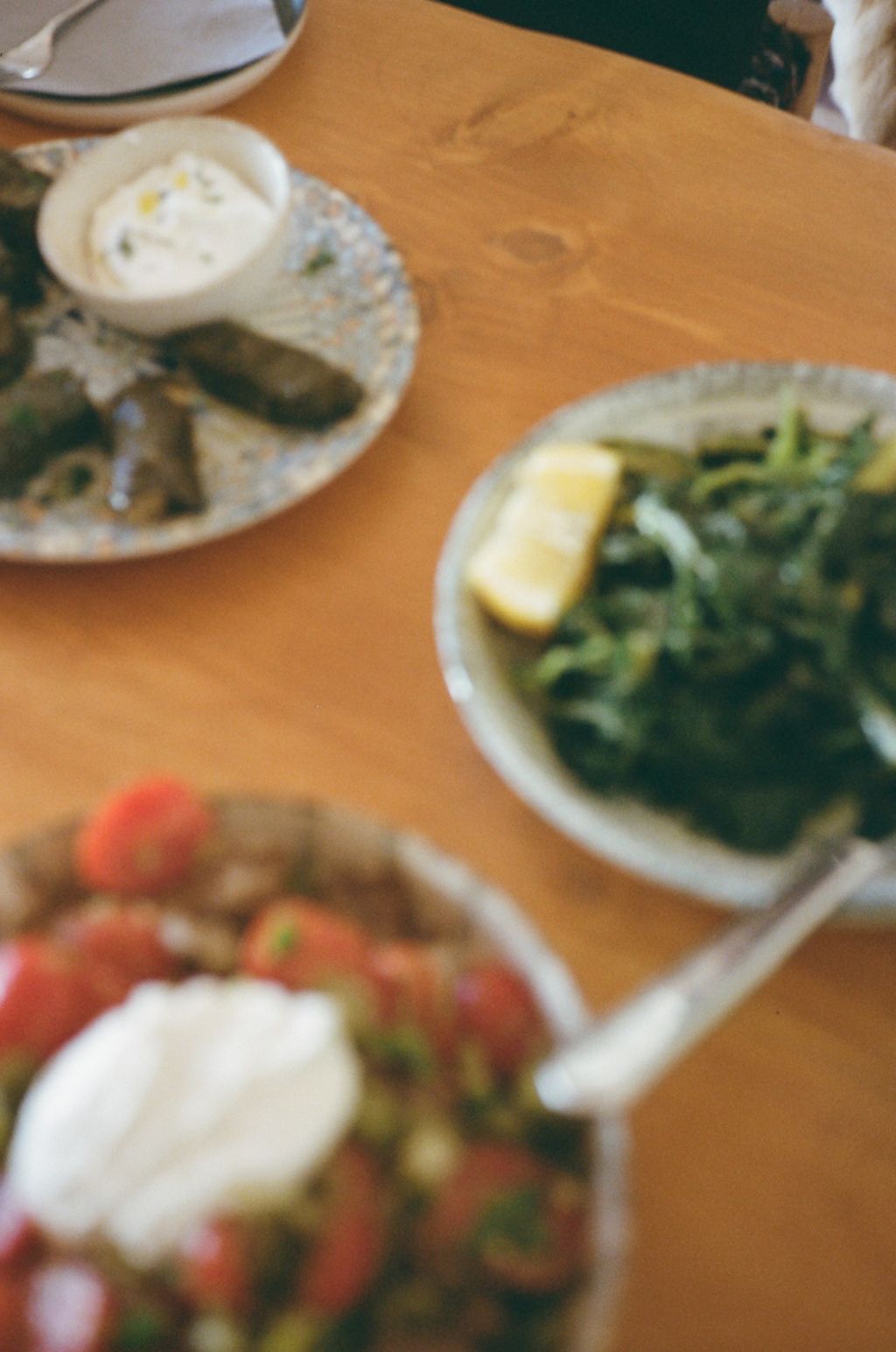
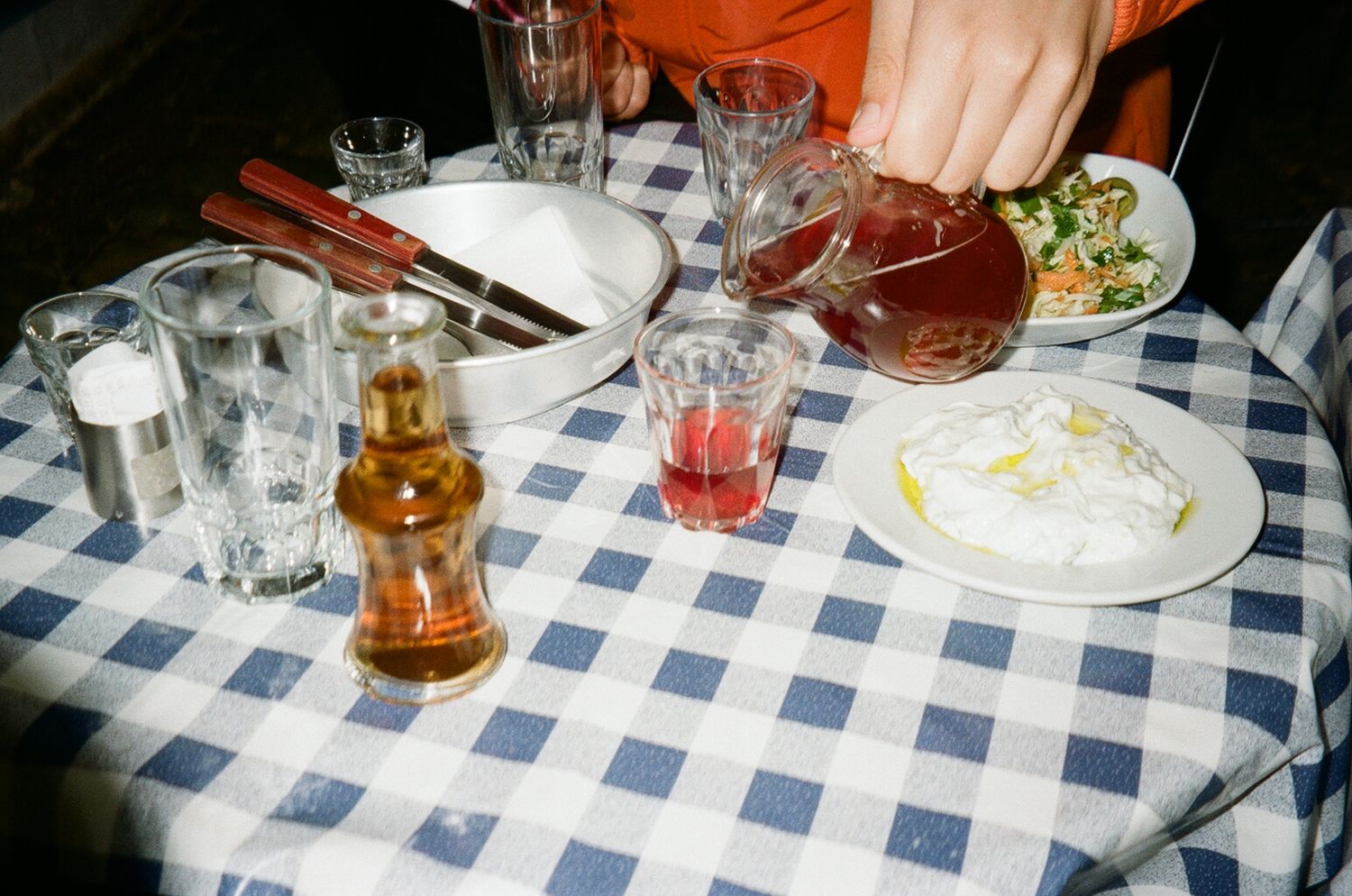
A taverna table has no interest in the clock.
This may be the clearest example of Greek analogue life. A table is not treated like a time slot. You sit, you eat, you talk, and you stay. What matters is parea (παρέα / pa-RE-ah) — the warmth of the group, easy conversation, and the sense that nobody has anywhere more important to be.
The Market
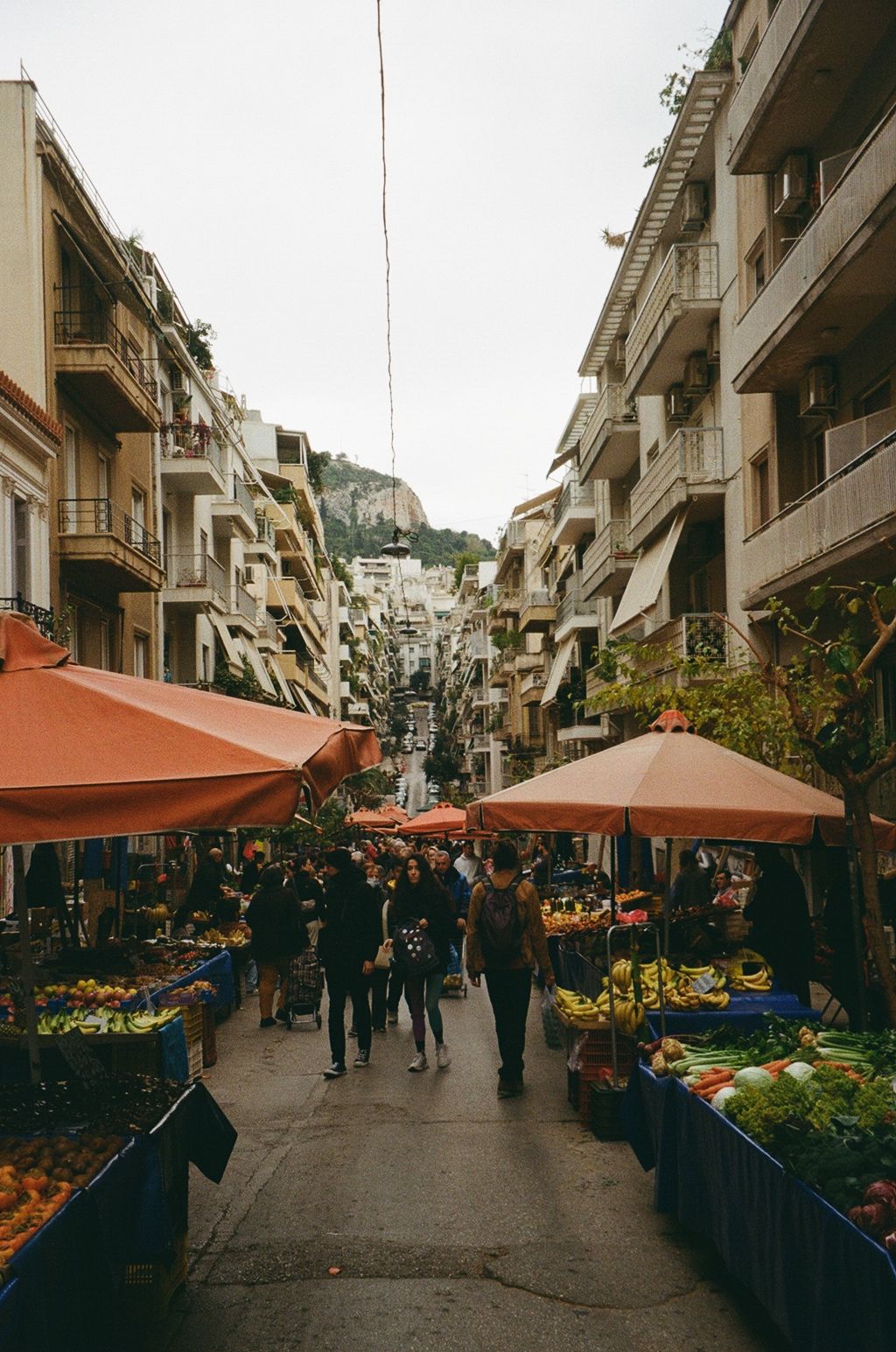
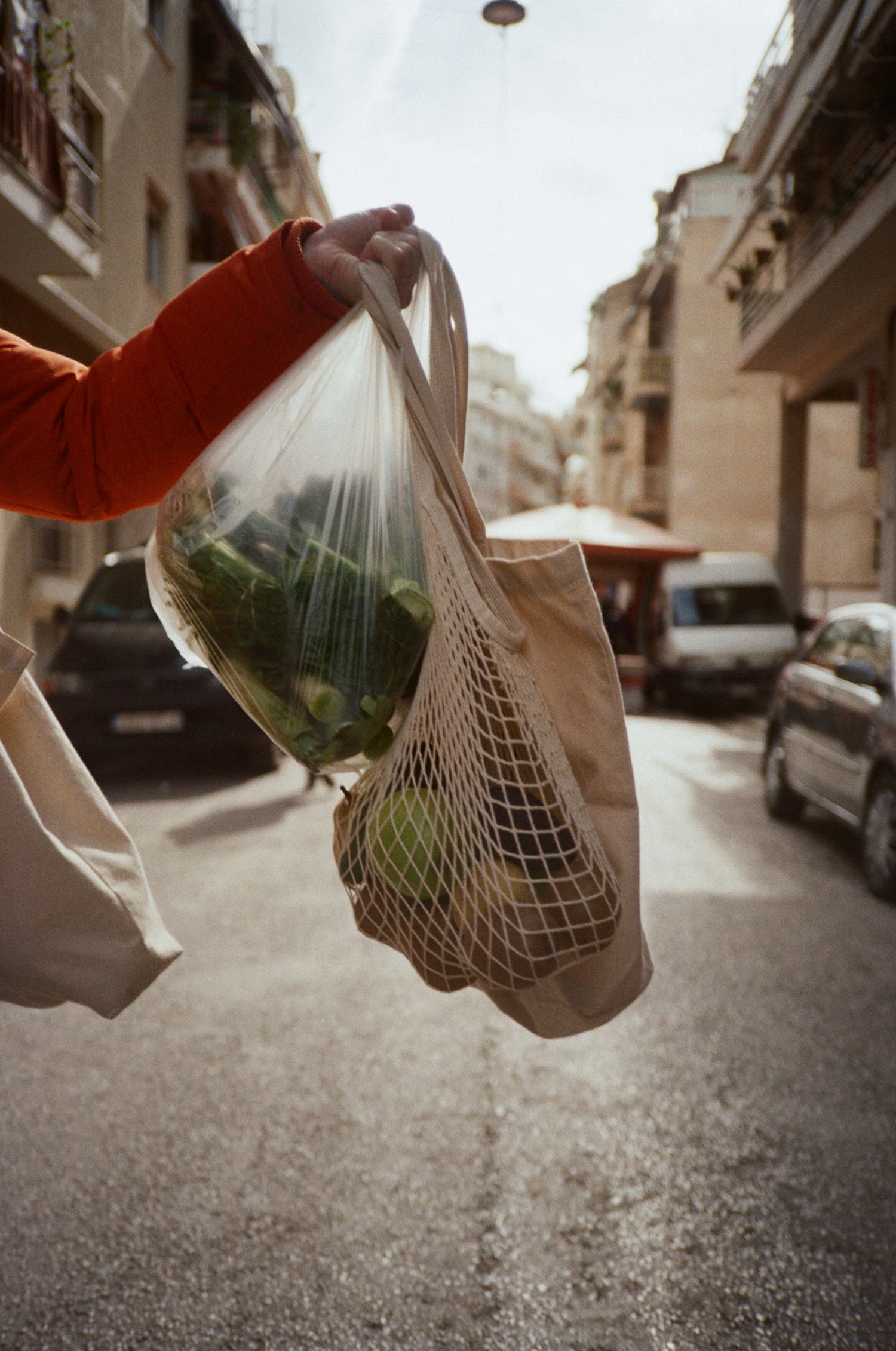
The Greek market still has a human hum.
Go to a laïkí (λαϊκή / la-ee-KEE) — the neighbourhood street market — and the difference is obvious. This is not shopping through barcodes, packaging, and self‑checkout. It is tomatoes weighed by hand, herbs added without asking, coins in your pocket, and a small exchange with the person selling you your food.
Yes, Greece accepts tap now. But the market still feels tactile, local, and stubbornly human.
The καφενείο (Café)
Greek Coffee Culture
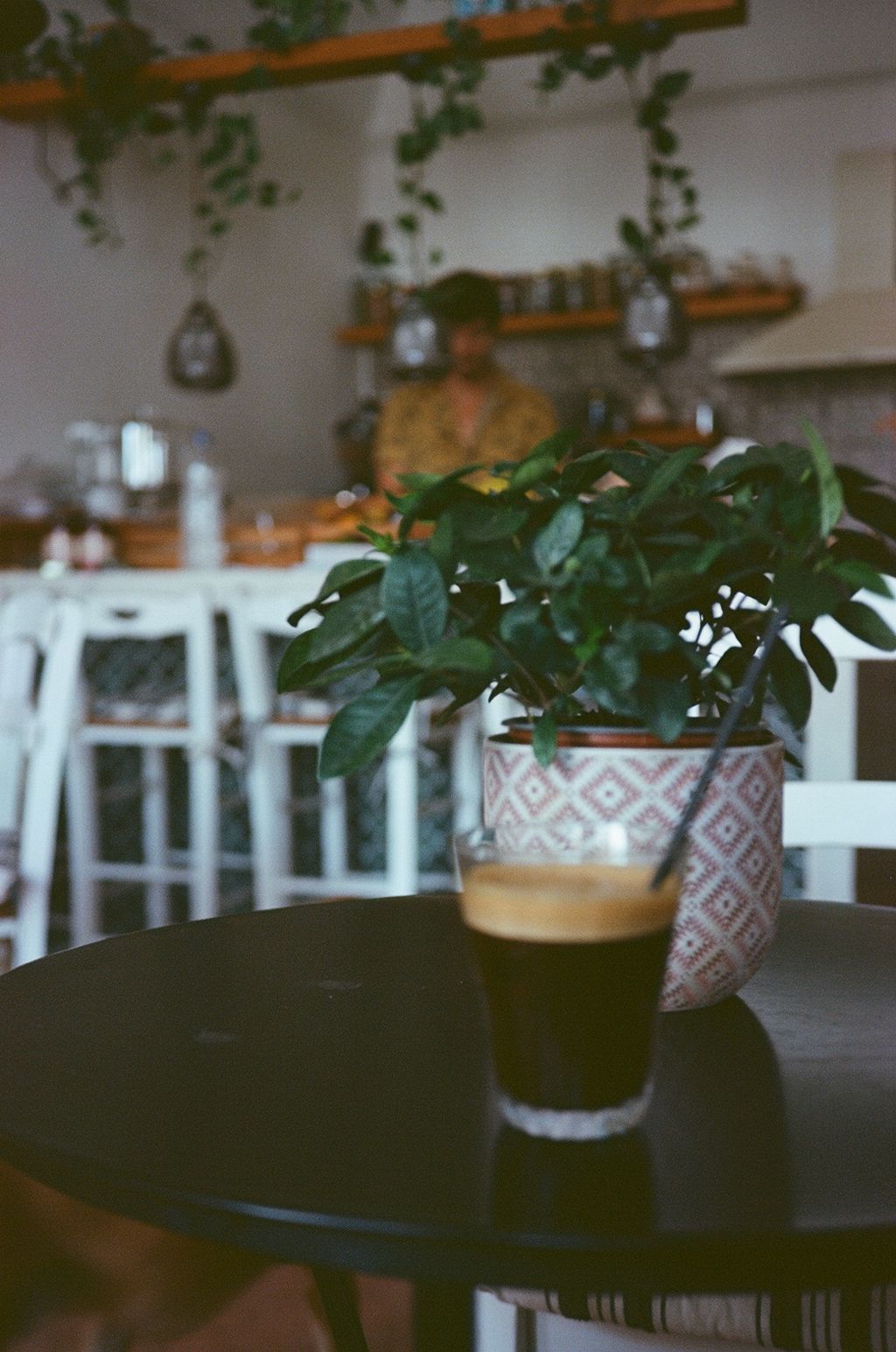
Coffee in Greece is the opposite of grab and go. It is something you sit with. A freddo espresso, a frappé (φραπέ / fra-PEH), or an ellinikós kafés (ελληνικός καφές / eh-lee-nee-KOS ka-FES) — Greek coffee boiled slowly in a small pot — can stay beside you for hours.
Watch the locals and you will notice the pattern. A single coffee becomes a companion for the afternoon. Conversations drift in and out. People sit, talk, observe, and let the day move around them.
That ritual is quintessentially analogue. Coffee culture here is not fuel. It is a reason to remain, to talk, and to watch life unfold without the need to speed it up.
The Paralía
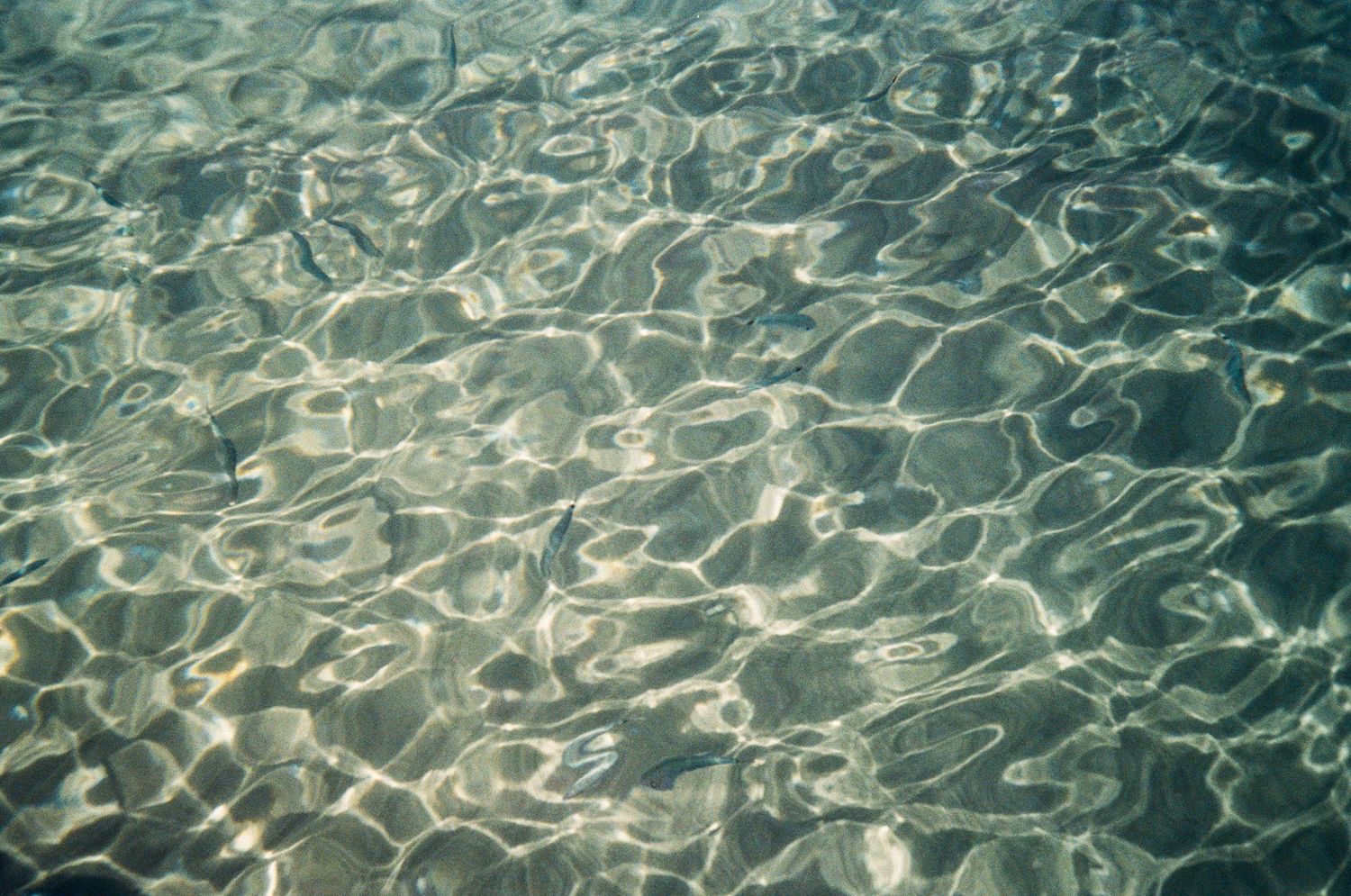
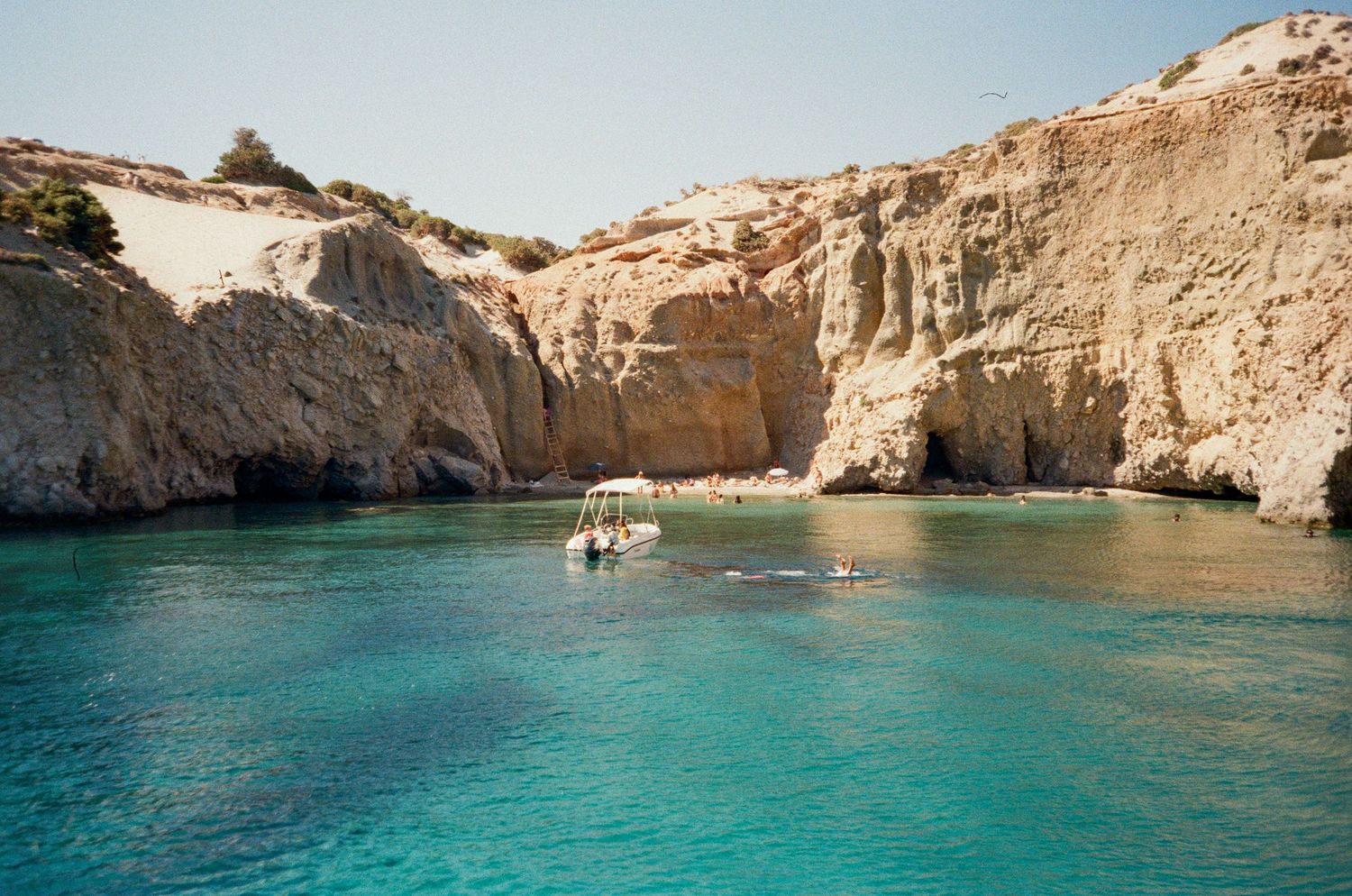
Greek beaches have no respect for your screen time.
The sun overheats your phone, the glare makes the screen unreadable, and the signal drops just enough to make scrolling feel pointless.
So other things take over. Books return. People fall asleep under an almýra (αλμύρα / al-MEE-ra) — the tamarisk tree often found near the sea. Swimming goes on longer than intended, and paddle ball slowly takes over half the beach.
Try doom‑scrolling on the paralía (παραλία / pa-ra-LEE-a) and your phone will start flashing temperature warnings like it is personally offended.

The Plateia
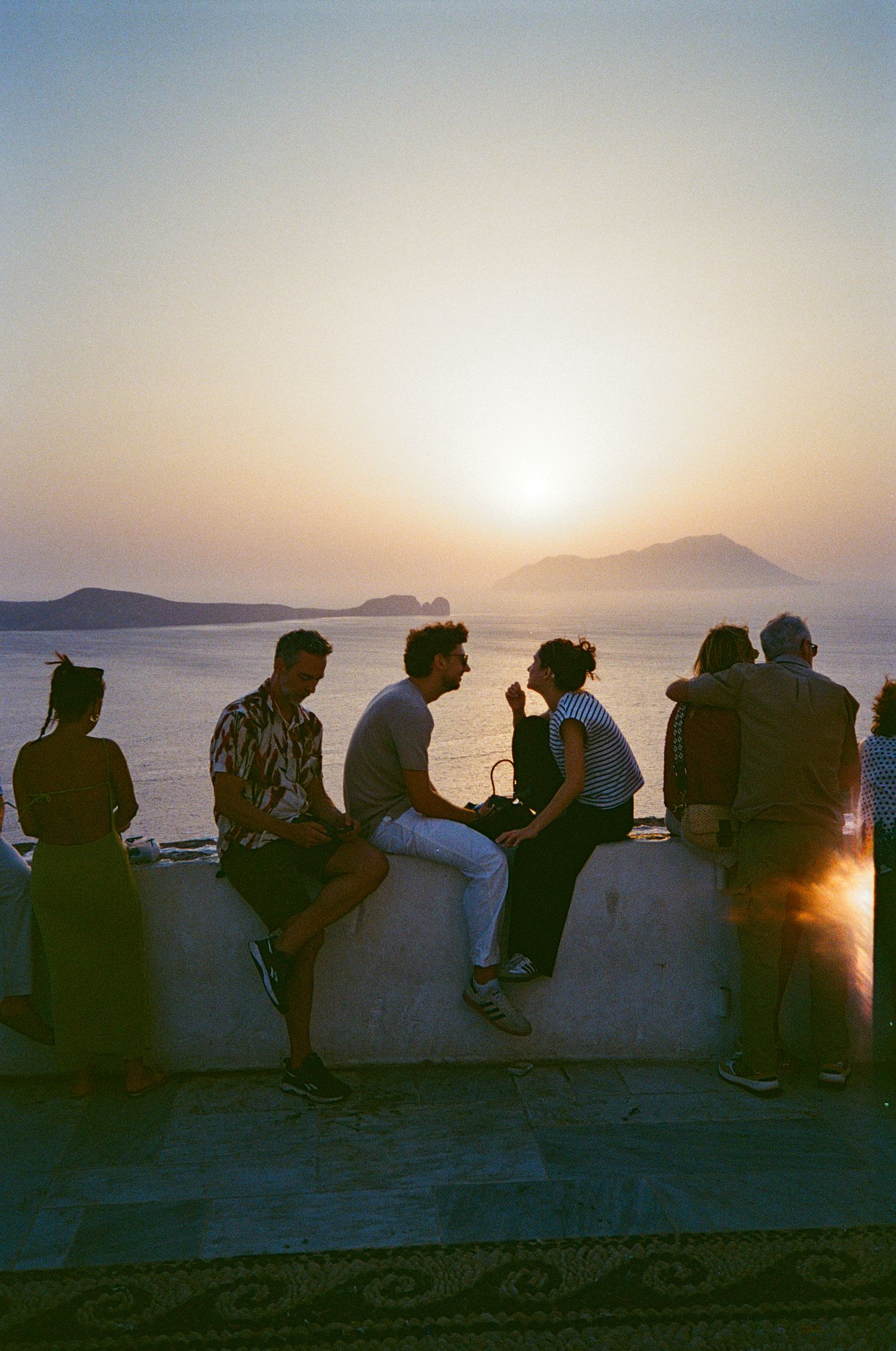
Every Greek town still gathers in the same place.
The plateia (πλατεία / pla-TAY-ah) — the town square and social centre of a neighbourhood — is not an event. It is not programmed and it does not need a concept. People simply arrive. Children run between chairs, grandparents observe everything, teenagers circle the square, and coffee keeps appearing long after dinner should have ended.
Stay long enough and the evening takes shape on its own.
The Craft
Clay has a way of slowing the hand down.
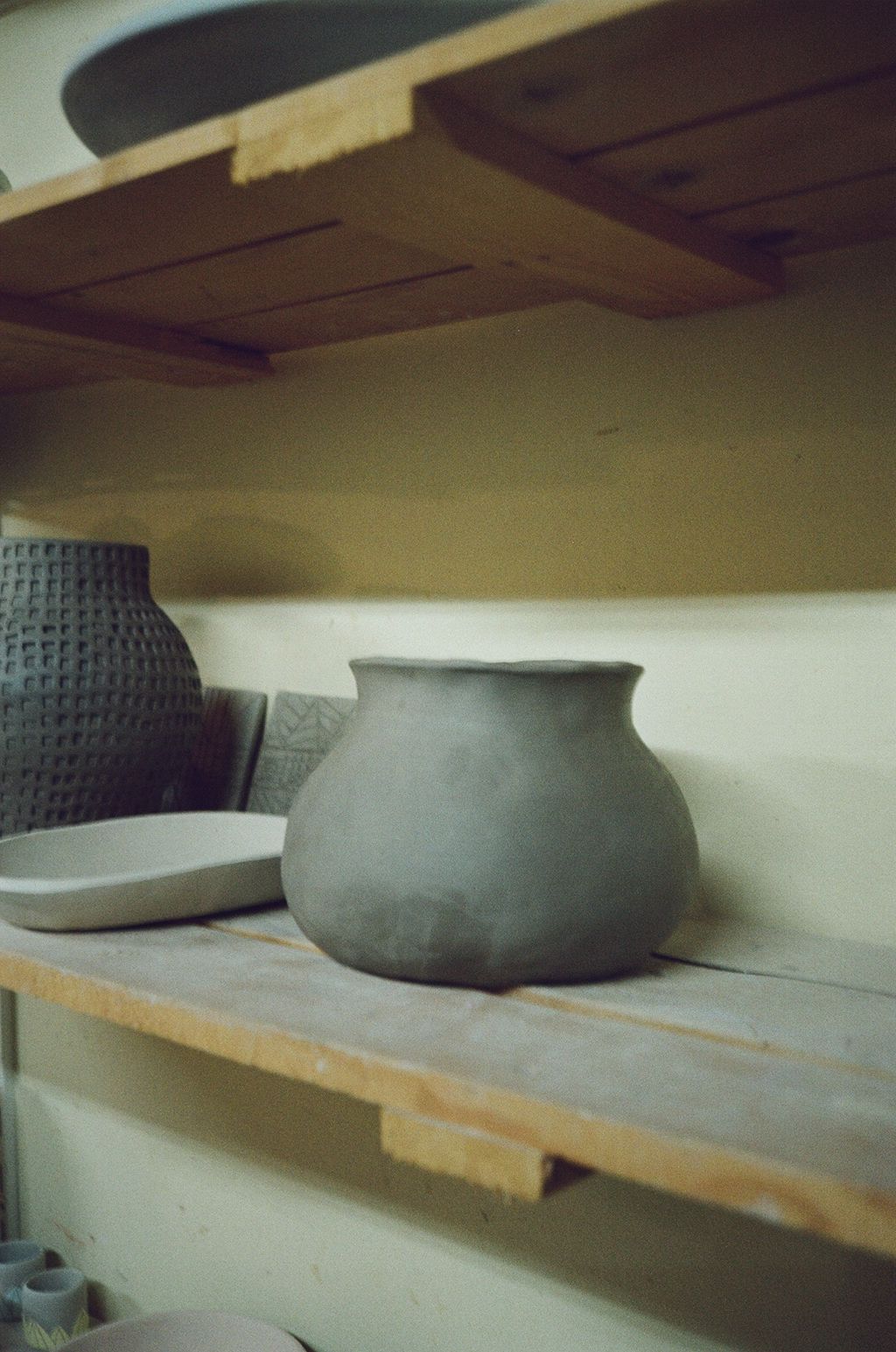
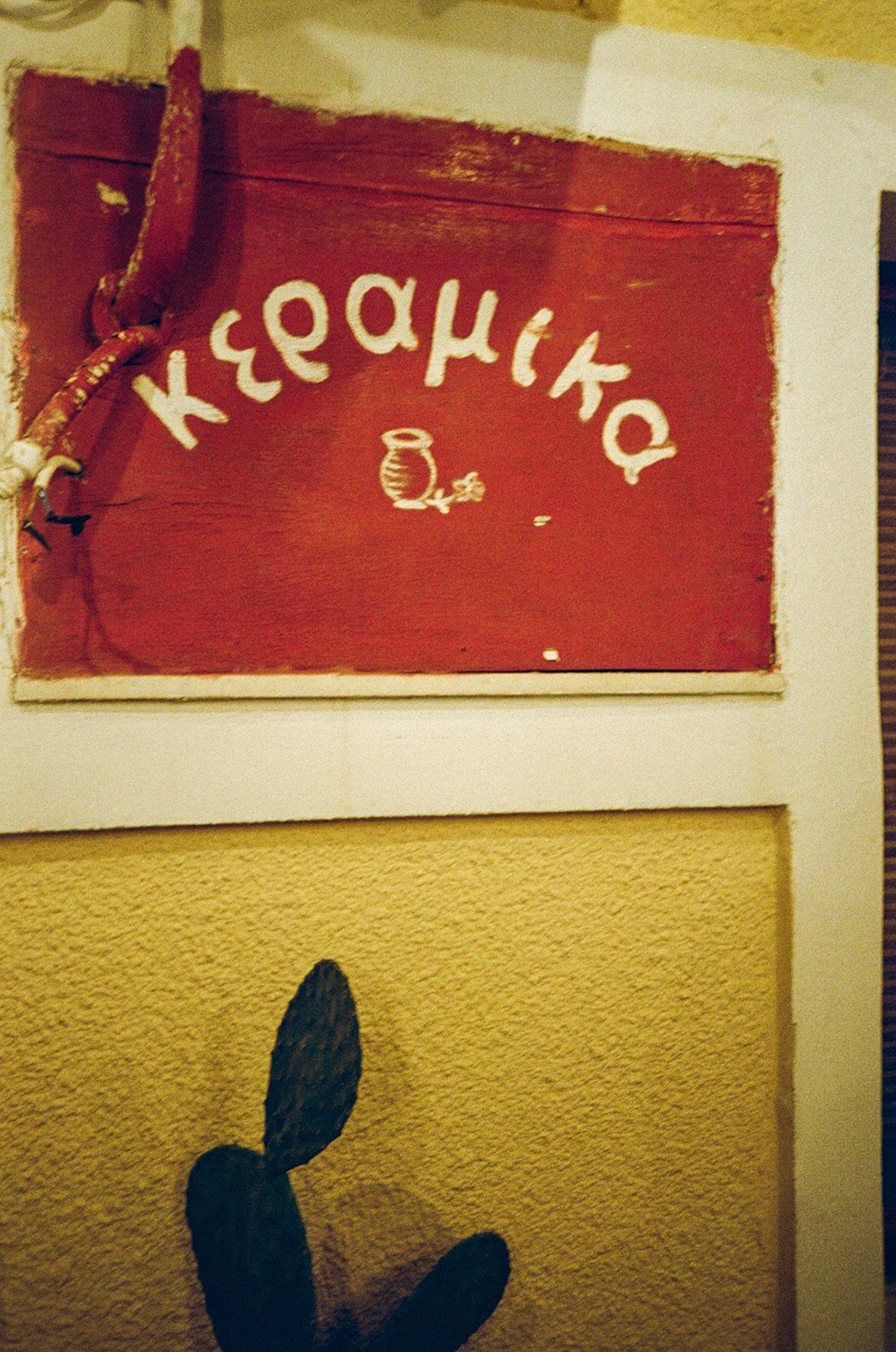
What feels more analogue than clay? In Greece, that relationship runs deep. Keramiká (κεραμικά / keh-ra-mee-KA) — the Greek word for ceramics or clay vessels made for daily use — are not just beautiful objects. They sit inside a much longer history of vessels, amphorae, domestic pottery, and everyday use.
That is what sets Greek ceramics apart. They do not feel detached from life. They carry continuity, utility, and the mark of the hand. Cups, plates, bowls, and serving pieces still belong naturally to kitchens and tables, not just shelves. They are made to be held, used, chipped, washed, and used again.
There is something deeply analogue about that. Not decoration for decoration’s sake, but objects shaped by hand and folded into daily life.
The Recipe
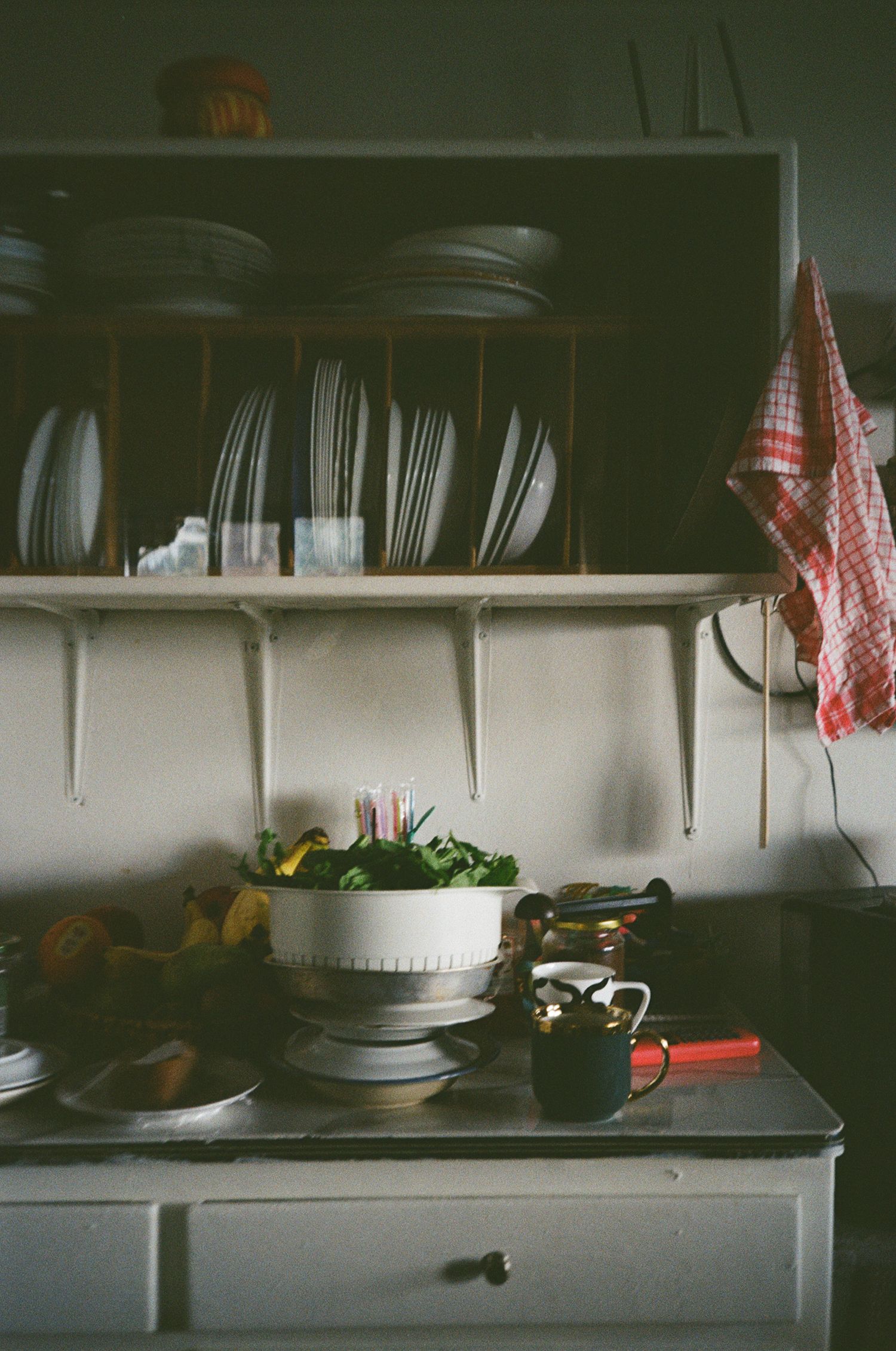
Some recipes are carried, not written.
Greek kitchens still understand this instinctively. Not everything valuable needs to be measured, archived, or turned into content. Someone starts making koulouria (κουλούρια / koo-LOO-ree-ah) — hand‑rolled Greek sesame biscuits. Flour appears on the counter, sesame seeds scatter everywhere, and the instructions are something between memory and argument.
The recipe survives because it lives in the hands.
The Moment
Analogue photography belongs here.
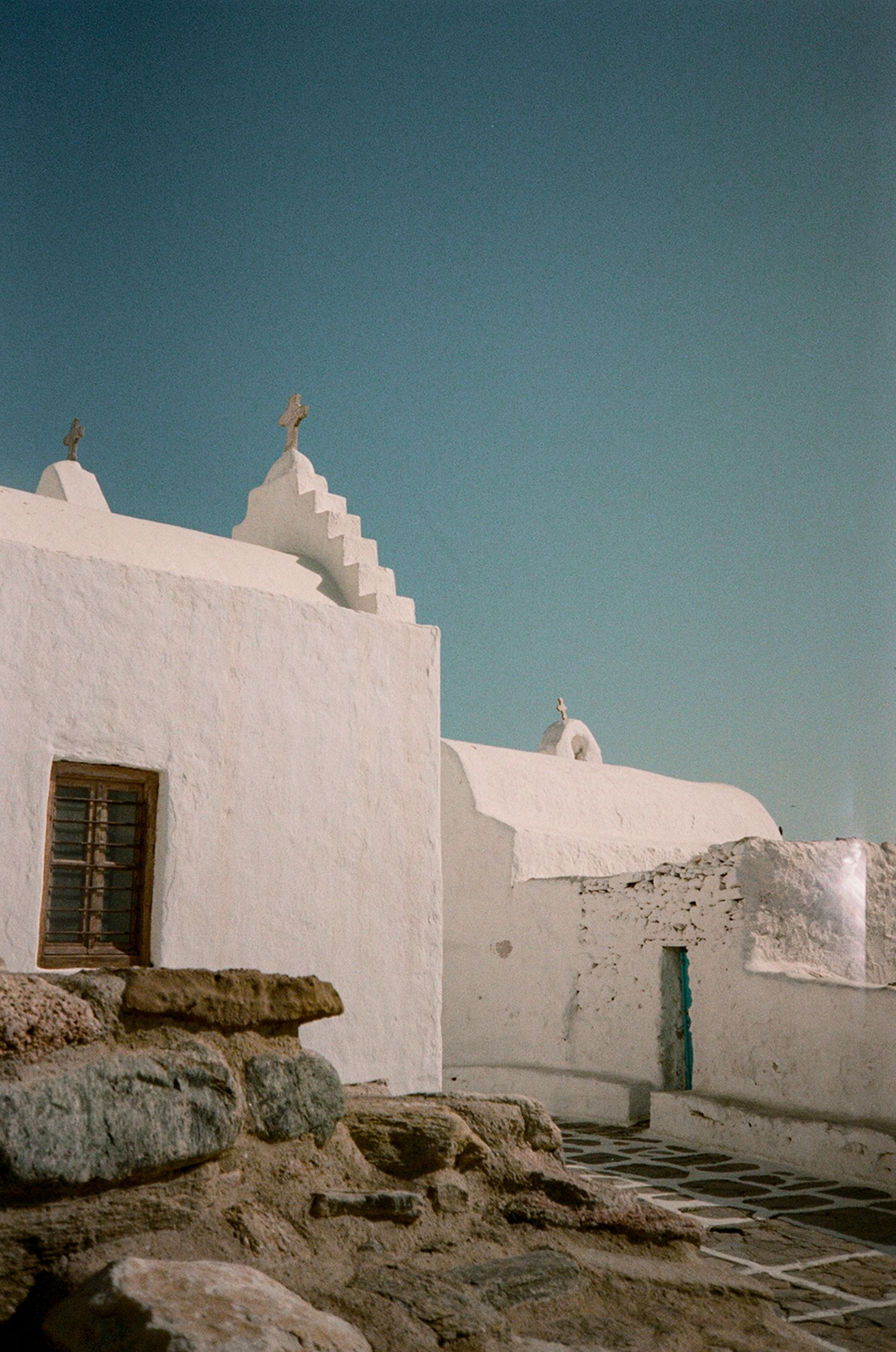
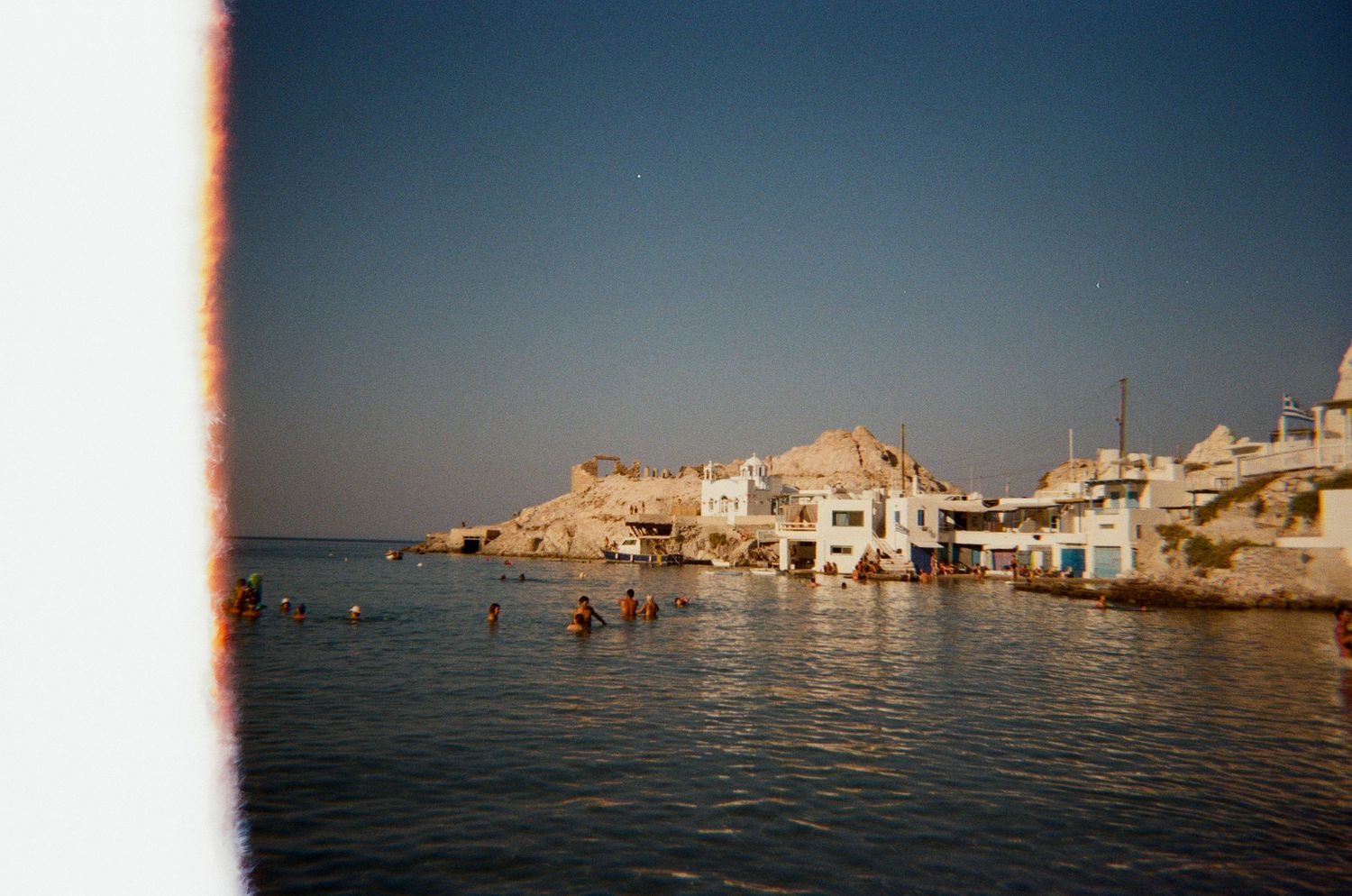
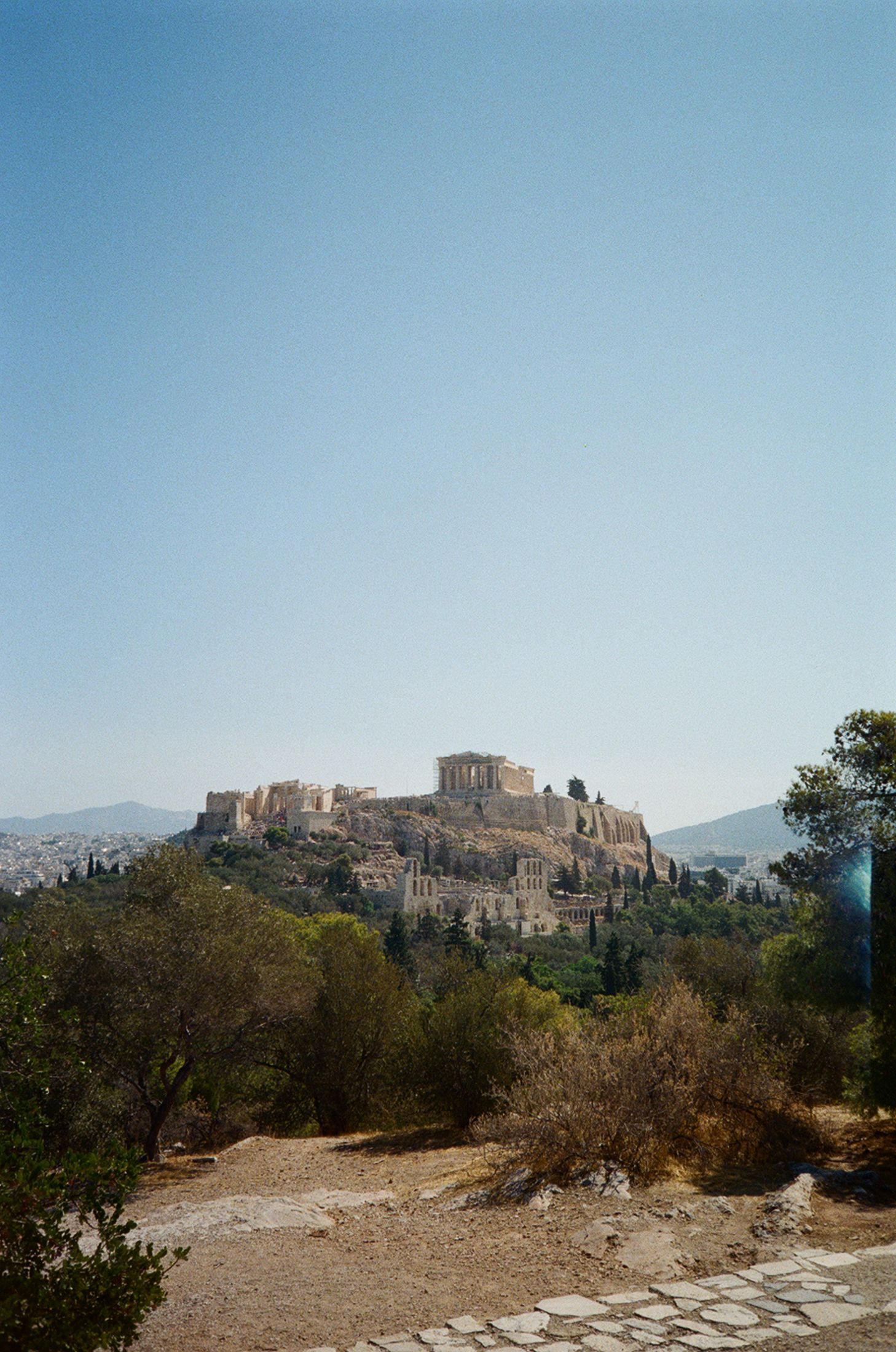
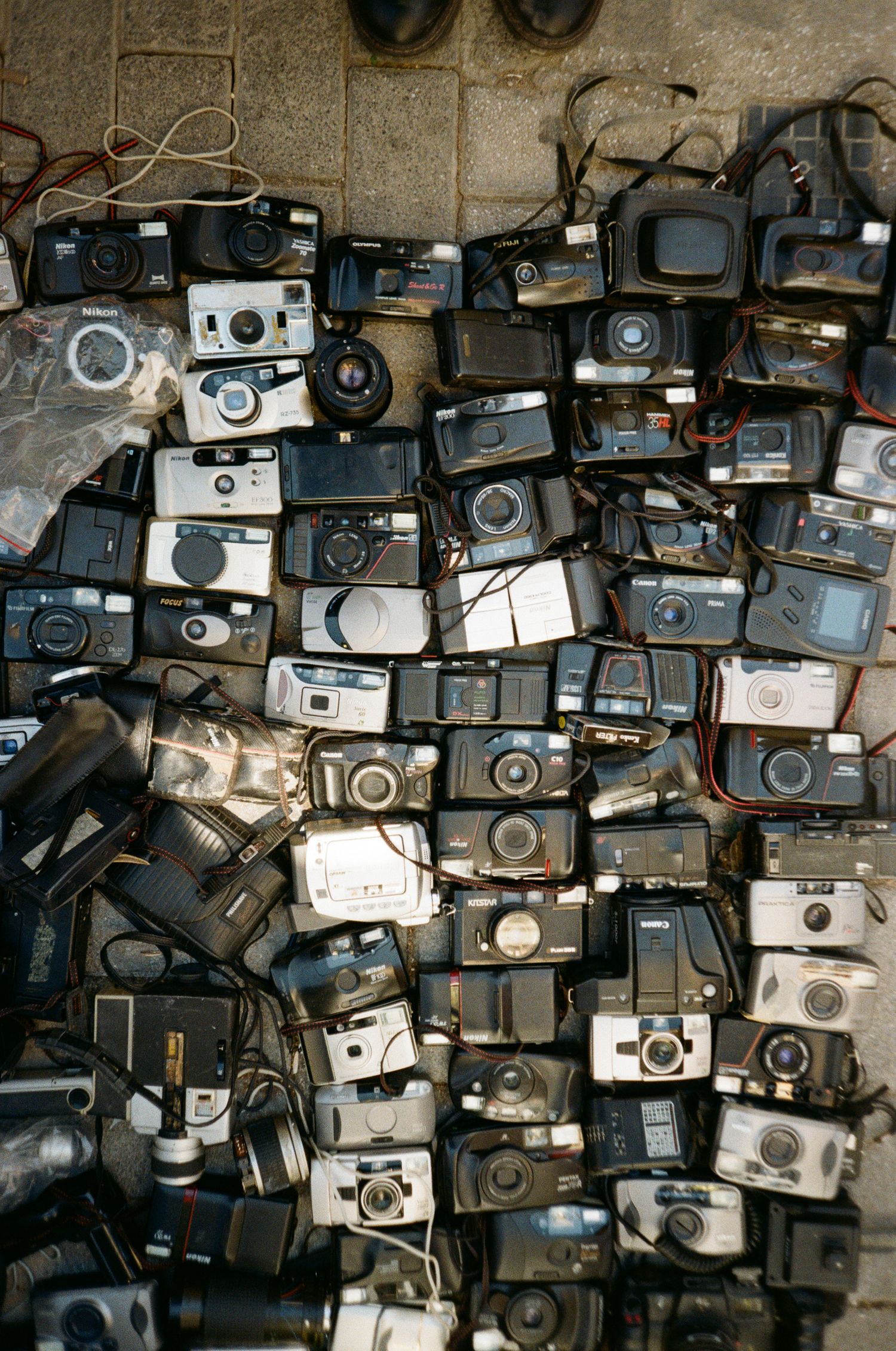
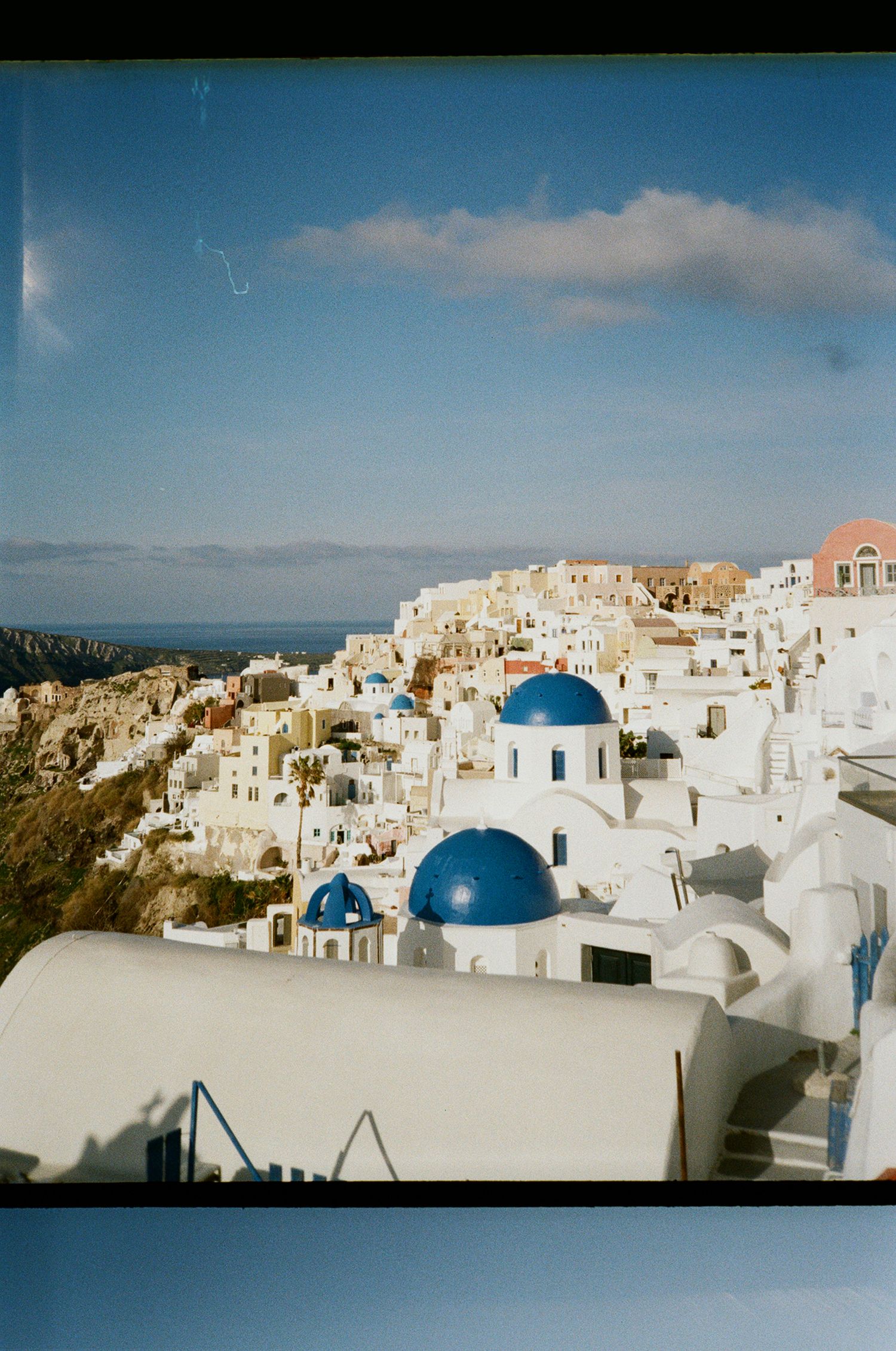
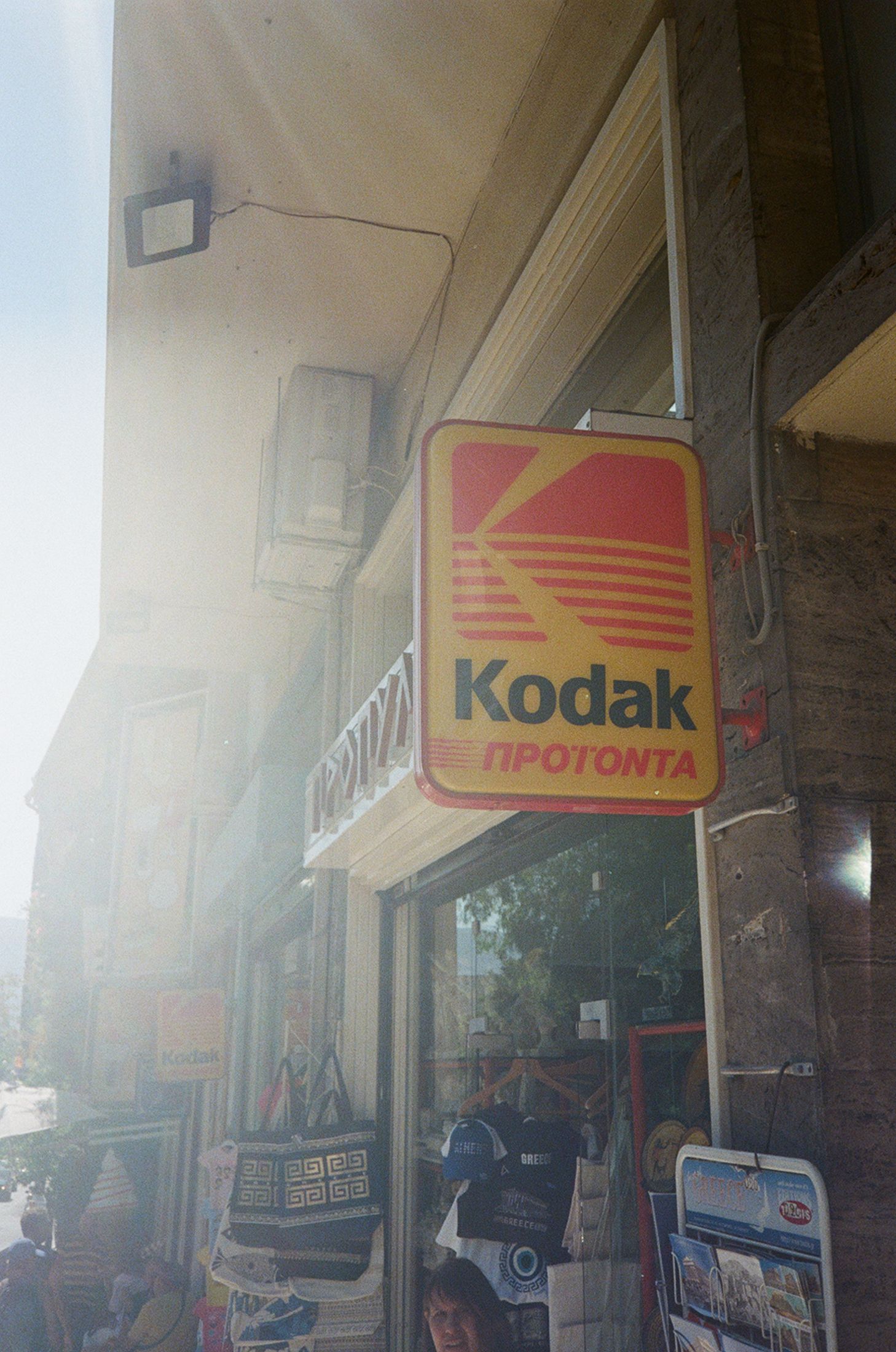
Greece already carries the look of memory. The country often feels visually archived before you even take a photograph. Harsh sun, deep shadows, faded shutters, and layers of architecture from different eras coexist on the same street. My favourite detail is the camera shops still wearing their original Kodak signs, the same ones that have hung above their doors for decades.
Modern travel has created something strange: anticipated memory. We curate experiences for the photograph before the moment has even finished happening. The quiet question behind many trips has become: was I even there if I did not photograph it?
Film never had that habit. With a limited number of frames and no instant playback, you pay attention before pressing the shutter. The photograph becomes something you respond to rather than something you manufacture.
This is why analogue photography fits Greece so naturally. The pace of daily life already encourages presence. Meals linger. Conversations drift. Entire evenings gather in a square. Photography becomes part of the experience rather than the reason for it.
This is also the approach behind my work. I photograph Greece on real 35mm and medium format film, moving through places the way people actually experience them: walking through neighbourhoods, sitting in cafés, wandering villages, and letting the environment shape the photographs.
For couples travelling to Greece for a wedding, an elopement, an engagement, or simply a meaningful trip, an analogue photo session offers a way to document the experience without turning it into a performance. The result is a set of photographs that feel lived in and tied to the atmosphere of the place where they were made.
Why Greece Still Feels Analogue
Greece did not invent analogue living, but it has held onto habits that much of the world has gradually traded away.
Long meals, markets with texture, public squares that still function, and recipes carried by memory. Travel can still be experienced through the senses rather than through constant self‑documentation.
That is what makes Greece feel so relevant right now. At a moment when people are looking for relief from digital fatigue, Greek daily life offers a working model.